

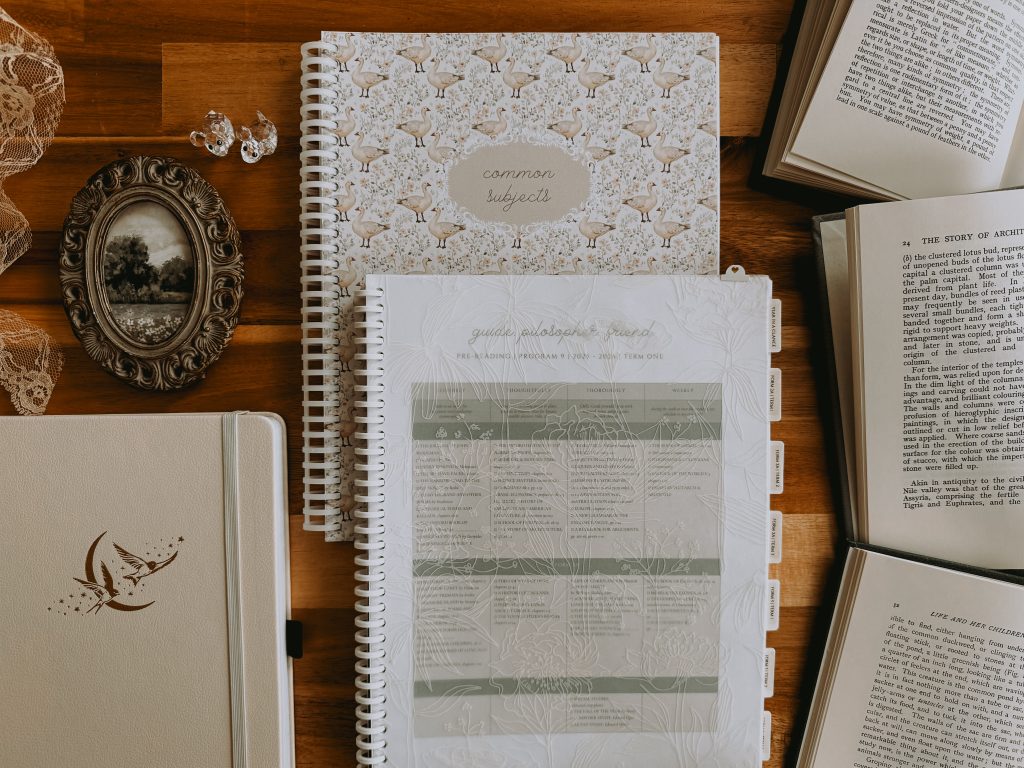
“The teacher’s part is, in the first place, to see what is to be done, to look over the work of the day in advance and see what mental discipline, as well as what vital knowledge, this and that lesson afford; and then to set such questions and such tasks as shall give full scope to his pupil’s mental activity.”
— Charlotte Mason, Volume 3, pg. 180-181
“We as teachers depreciate ourselves and our office; we do not realize that in the nature of things the teacher has a prophetic power of appeal and inspiration, that his part is not the weariful task of spoon-feeding with pap-meat, but the delightful commerce of equal minds where his is the part of guide, philosopher, and friend.”
— Charlotte Mason, Volume 6, pg. 237
What roles does a mother teacher play in high school education? How do we guide and prepare our students in self-government and self-education? I have often wondered, with the blessing of a wide variety of open-and-go homeschool curricula on the market, is it even necessary and worthwhile to provide a true Charlotte Mason education, of which the teacher is part of the guide, philosopher, and friend for her pupil?
I was first aware of my ignorance and inadequacy when my firstborn started high school last year. Suddenly, I found myself very disconnected from her learning, unequipped for profound discussions, and deeply regretful of my lack of preparation last summer. By the grace of God, I discovered the CMEC and am approaching this upcoming new year with a fresh perspective and renewed hope. But, to be honest, although I am grateful for all the resources The CMEC has offered to equip me as a mother teacher, I am feeling overwhelmed by all the details in the summer planning process, and often wonder, “Will I even be able to pre-read all the books?”
My situation is like facing a huge pile of unattended laundry, not knowing where to start. However, God has blessed me with the eyes to look straight at the laundry pile, the hands to fold and sort through the “chaos,” and then neatly put everything back into their designated drawers.
I thought to myself, if I could bring order to my laundry pile, I could do the same for homeschool planning this summer. Having a workflow and knowing what to do next gives me tremendous peace and clarity. Additionally, doing things in the right order saves me time and money. Some tasks, such as printing, gathering books & supples, can be simultaneous. Although my workflow may not strictly apply to your family, my hope is that it will inspire and encourage you to take up this delightful task of summer planning with the goal of becoming your student’s guide, philosopher, and friend.
Gather Your Resources Ready:
1. The CMEC Program (there is a Sample Timetable on the last page for reach term)
2. The CMEC Shopping Lists
3. The CMEC Form Guides
4. The CMEC Subject Guides & Resources
5. The CMEC Timetable Quick Sheet (under Curriculum)
6. The CMEC Forms-at-a-Glance (under Curriculum)
7. The CMEC Notebooks-at-a-Glance (under Curriculum)
8. Notebook for Pre-Reading Notes
9. Homeschool Planner
10. Term Planning in A Glance Printable
STEP 1: Study The CMEC Program
Grab: The CMEC Form Guides; Shopping Lists; Forms-at-a-Glance; and Program
While I used to go straight to book shopping, I now start with the education itself, and determine my student’s strengths, needs, and whether we have enough time budget during the week to accomplish everything we set out to do. I take my time in reading the Form Guide, understanding the philosophy behind each chosen book, thinking through what my student has previously read, and highlighting related resources for further studies. For example, my Form 5 lower completed High School Chemistry last year, so, instead of repeating the same subject, she will do Form 4 Physical Science next year. Since we are switching from another curriculum, she may be doing Year 1 reading instead of Year 2.
As I read the Form Guide, I mark on the Shopping List as follows: O (owned), X (skipped), or S (shared with other forms). I also glanced through the Program and the Forms-at-a-Glance document to have an idea across terms and across the years to see if I need to make any adjustments.
STEP 2: Set Weekly Time Table for Student
Grab: The CMEC Program; Timetable Quick Sheet
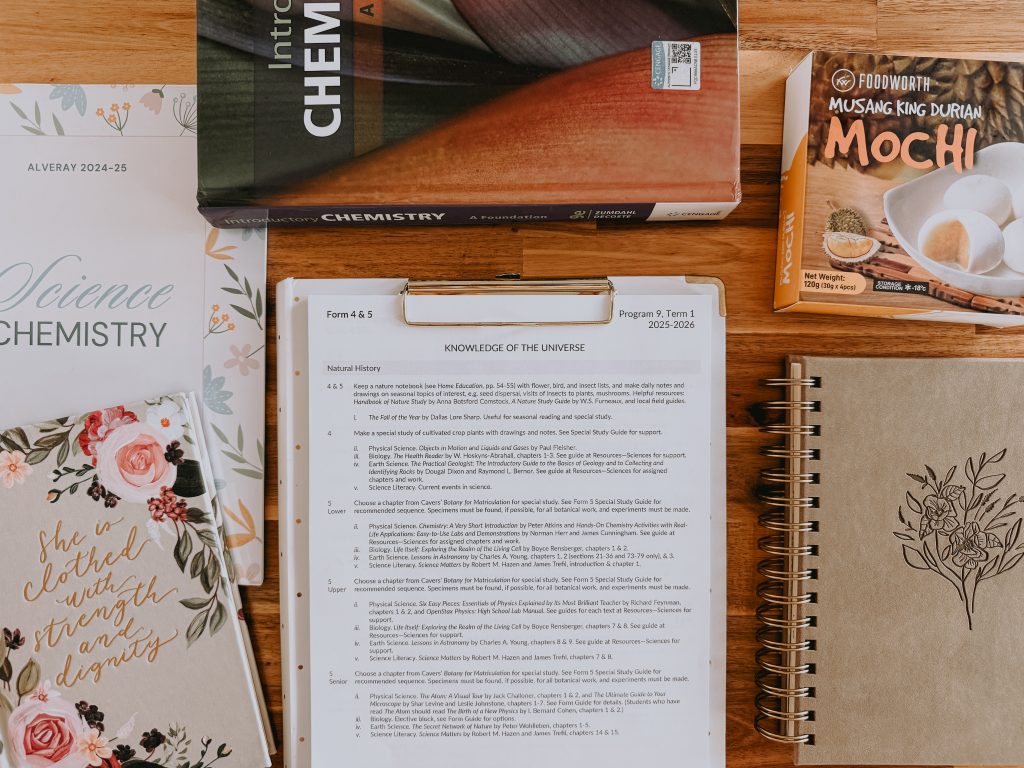
Again, before going straight into shopping, I further analyze our time budget to confirm that we can fit our wishlist into reasonable time blocks. The Timetable Quick Sheet is a valuable resource to view the suggested time for each subject across forms. The Program has suggestions whether the book should be read in the morning or afternoon.
All challenging work are assigned as morning lessons when I set one hour set aside for my high schooler’s consultation and the rest of the morning working with lower forms. Afternoons are for more note-booking, leisure reading, handicrafts, etc. We also set aside one hour each Friday when all my students sit together for Common Subjects (we call ours “Truth, Beauty, and Goodness”).
Your turn: Create a Weekly Time Table for Student (using Canva, a notebook, or a planner)
STEP 3: Gather Books
Grab: The CMEC Shopping Lists
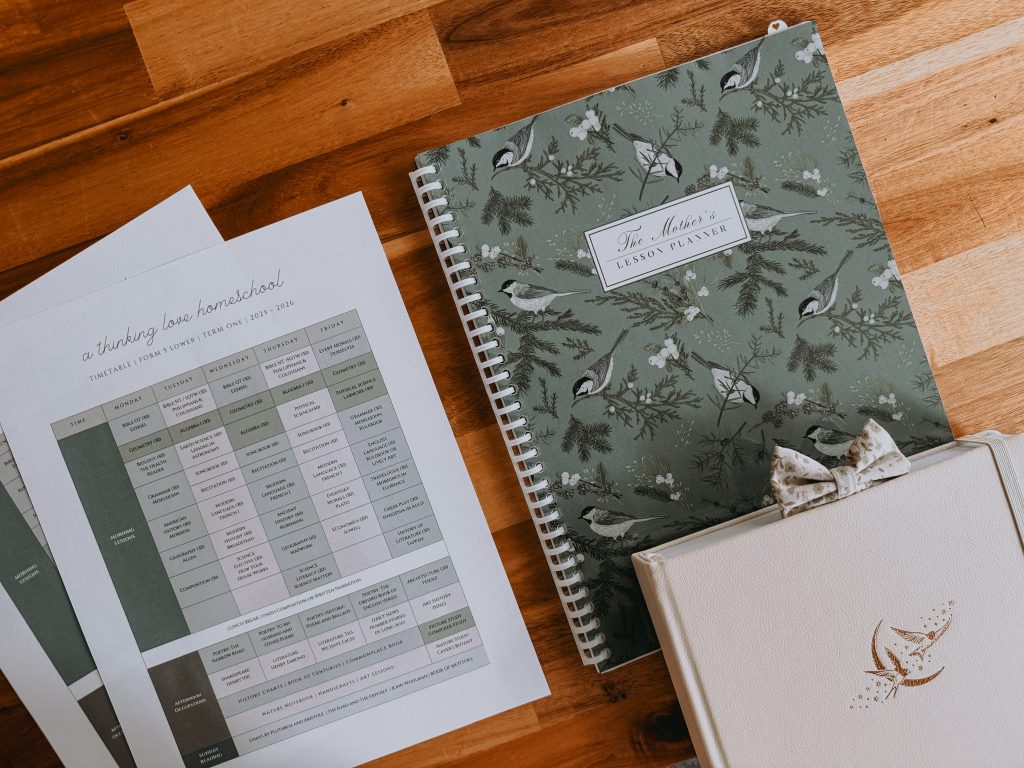
- Shopping for books looks a little different every school year and every homeschool family does it differently.
- For us, we start by decluttering our bookshelves to make room (and cash) for our new books.
- Then I take The CMEC Shopping Lists to our local bookstore.
- Some classics are actually free or just $0.99 on Kindle, so they save up some physical space.
- Next I search online for any used copies.
- In the meantime, I also keep an eye on any book sales on Amazon. You will be surprised that Target and Walmart carry a lot of Yesterday’s Classics books. Some books are actually cheaper at Rainbow Resource.
- We also utilize books from our local library and audiobooks from Hoopla, especially for history supplements and leisure reading.
- Last but not least, River Bend Press is my favorite place for heirloom, out-of-print, high-quality hardcover books. We are grateful to be able to invest in several of them for next year.
Once I have placed my order, I mark on the Shopping List as follows: check (purchased physical copy) or K (purchased Kindle version). When my books arrive (or found on our shelves), I put them into plastic tubs near my desk, then highlight the book title on my Shopping List.

STEP 3: Gather Supplies
Grab: The CMEC Shopping Lists; Notebooks-at-a-Glance
At the same time, I will decide if my students will have individual map books, artist prints, reference books, or just share among themselves. I will also take out the Notebooks-at-a-Glance document and decide if they need grid notebooks (great for math & science!), affordable college-ruled notebooks (for language arts, foreign languages, dictation, etc.), high-quality journal for note-booking (for written narrations), or heavyweight watercolor sketchbook (for nature journaling).

STEP 3: Set Aside One Day for Printing & Binding
Download The CMEC Subject Guides & Resources for printing.
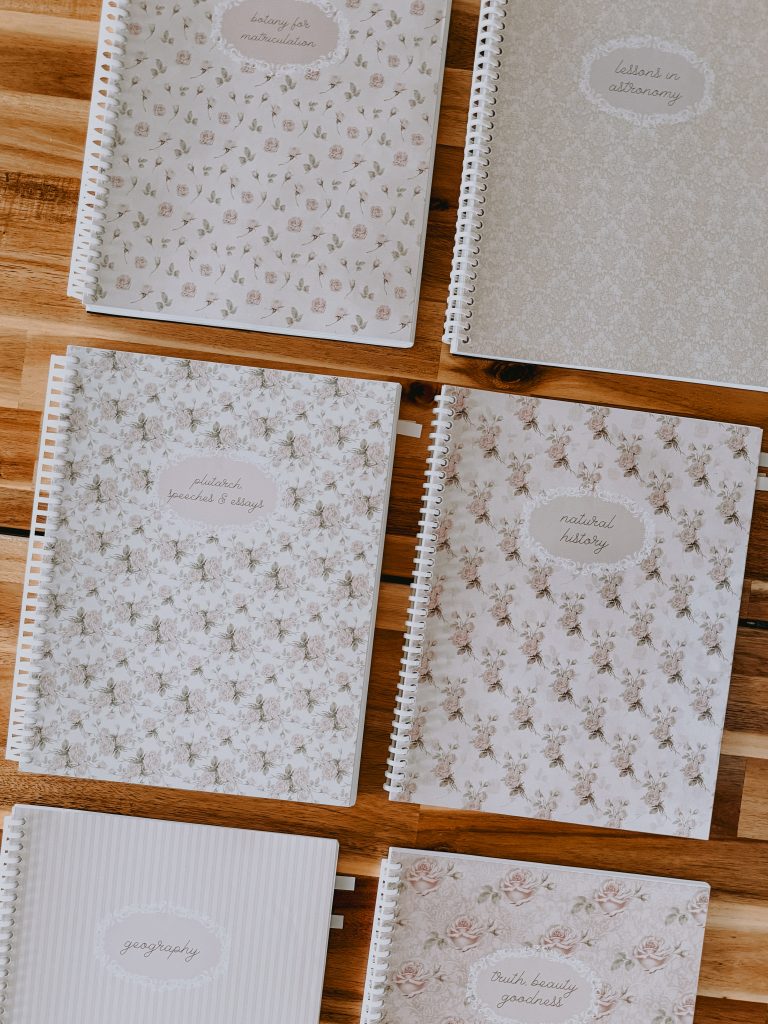
Printing & binding is my favorite step in the entire workflow. We have used the GBC ProClick Binding System for three years now, and I absolutely love it! This year my students and I will each have lovely, matching covers (Rococo Bloom for me; Pink Vintage Rose for my high schooler; and Boho Easter for my lower forms) that I customize using Canva. I print out all of the CMEC’s resources, mother’s courses, retreat packages, and parents’ review articles to make it easier to cultivate the habit of mother education. When school comes around, my students will also have their school resources ready.
STEP 4: Set Term by Term Pre-Reading Goals
This is the exciting part – making lists and categorizing my tasks. I divided my pre-reading goals by form and by term. Then, I determine what posture I would take as a student (and it can look different depending on your background and personality):
- Leisurely: for novels, biographies, historical fictions, and poems; for enjoyment and familiarity; with little to no notes; commonplacing, if time allows.
- Thoughtfully: for history spines, everyday morals & economics, common subjects; noting people & place, possible ideas for lessons, links, pictures, etc.
- Thoroughly: for Shakespeare, foreign language, language arts, science, geography; reading through the CMEC subject guides for prep work.
- Weekly: for Bible reading & commentary; math, if needed.
Your Turn: Pre-Reading Checklists for the Mother-Teacher (using Canva, a notebook, or a planner)
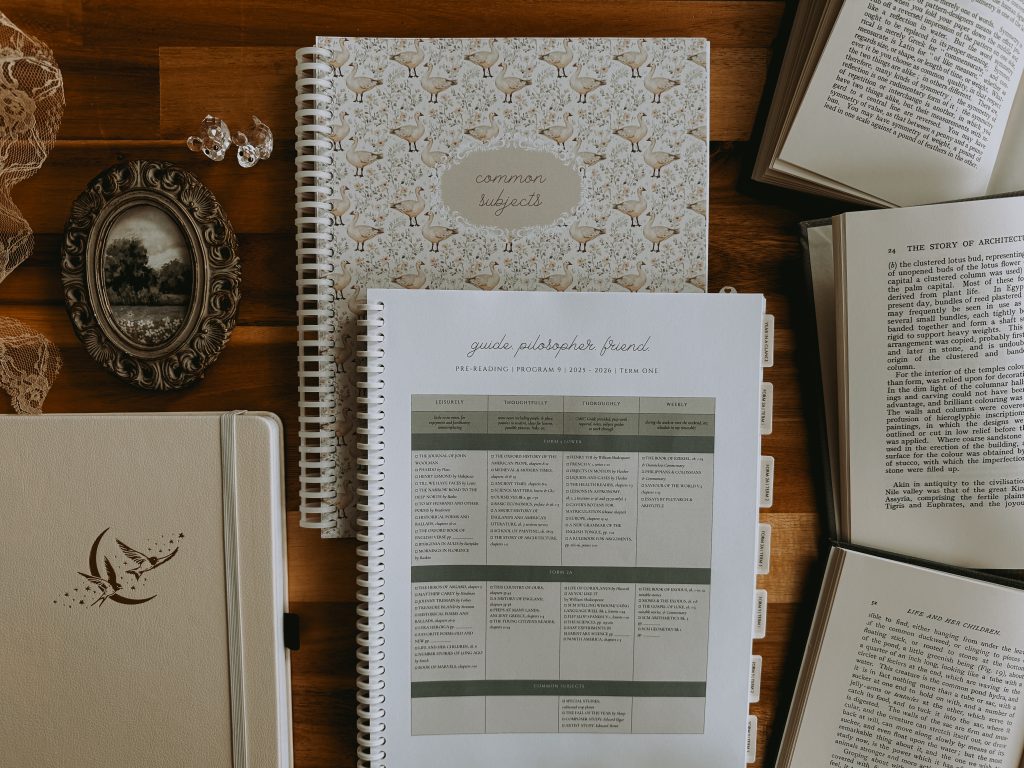
STEP 5: Start Pre-Reading and Note-taking
Grab: Notebook for Pre-Reading Notes
Summer is the perfect time to slow down and learn with my students. At the beginning of my pre-reading journal, I create a table of contents, noting Form, Subject, Book Title (P=physical copy; K=Kindle; A=audiobook; R=read only; N=notes; Term assigned), and Pages. I plan to look back on my notes when prepping for a new week, reading my student’s narration, or getting ready for deep discussions. I may or may not finish all my pre-reading in summer, but prioritizing Term 1 reading for now.
Your Turn: Pre-Reading Notes for the Mother-Teacher
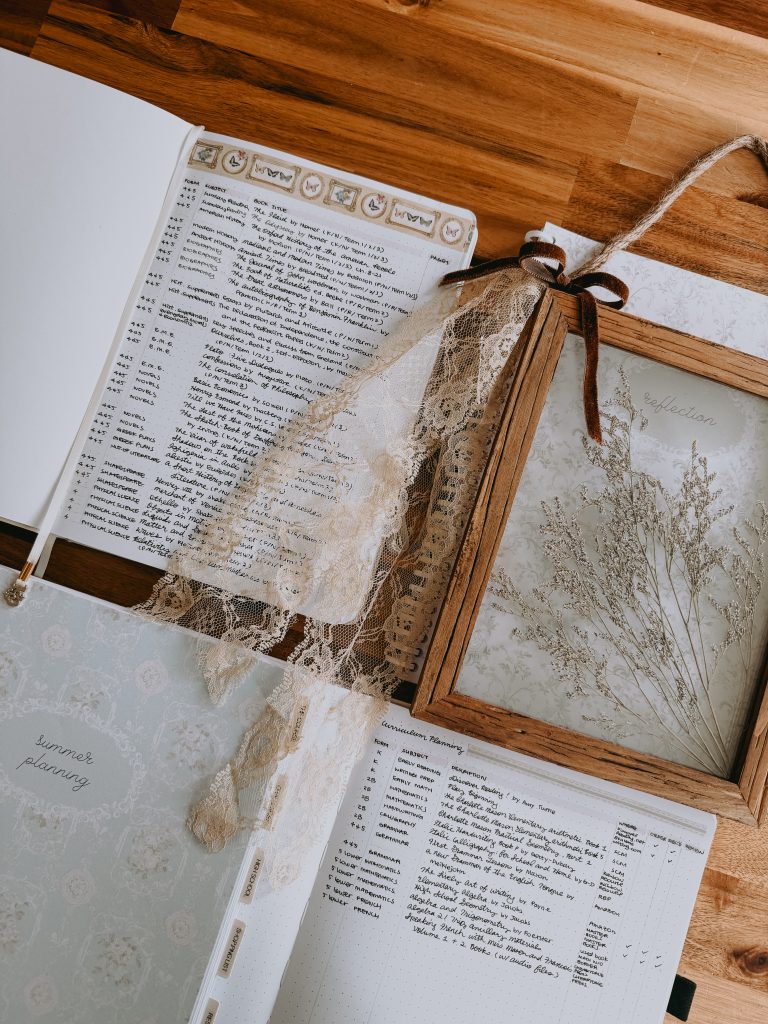
STEP 6: Set Term Goals for Students
Grab: Homeschool Planner; Term Planning in A Glance Printable
Once I have finished reading a book, I will have a better idea how to create pacing for their reading, taking into consideration of The CMEC’s suggestions for each book. The suggested page numbers are not boxes to check off, but mostly for my student to have an idea where they should be during the term. I do not share the Term Planning in A Glance with my student, but I do transfer the suggested page numbers per week per term on a post-it note, nicely tucked between the book cover and its first page of the book for their reference.
Your Turn: Term Goals for Student
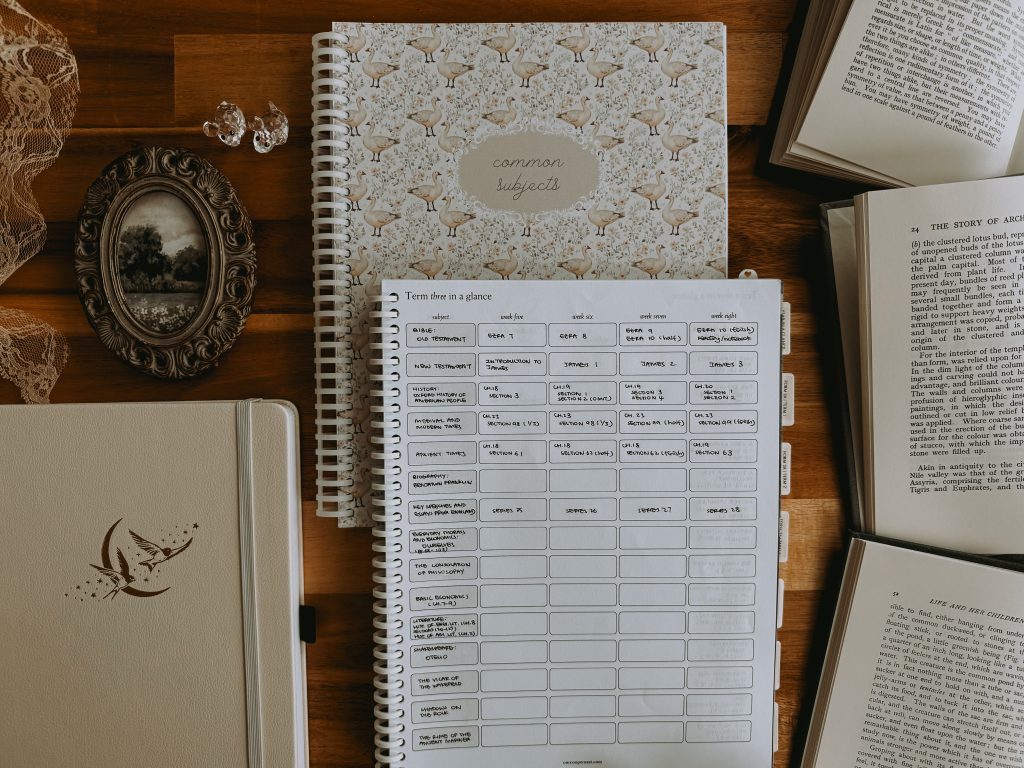
What You Will Create At the End:
1. Weekly Time Table for Student (using Canva, a notebook, or a planner)
2. Pre-Reading Checklists for the Mother-Teacher (using Canva, a notebook, or a planner)
3. Pre-Reading Notes for the Mother-Teacher
3. Term Goals for Student
At the time of writing, I am going back and forth between steps 4-6, hoping to get most of the work done this summer, while savoring our slow and loose schedule, working in my garden, organizing books, digging through the CMEC’s treasure grove, bringing beauty and order to our school room, meeting with friends, etc. I hope you will enjoy your summer planning as much as I do!






As a fellow CMEC mother-teacher, it’s always so enjoyable to see how others plan out their year. Thanks for sharing, Teresa! Everything is so thoughtfully and beautifully done which I’m sure will add merriment to planning out your year!
Hello, Brittany! I’m so glad that this little online space has allowed us to meet and inspire each other. Happy planning!