
Over the years of implementing Mason’s educational program, I believe that the main goals of education — the atmosphere of environment, the discipline of habit, and the presentation of living ideas — still hold true in high school. As we are finishing Term 2 this year, I would like to share what I have learned as a mother-teacher in homeschooling my teen:
1. To Cultivate the Habit of Attention
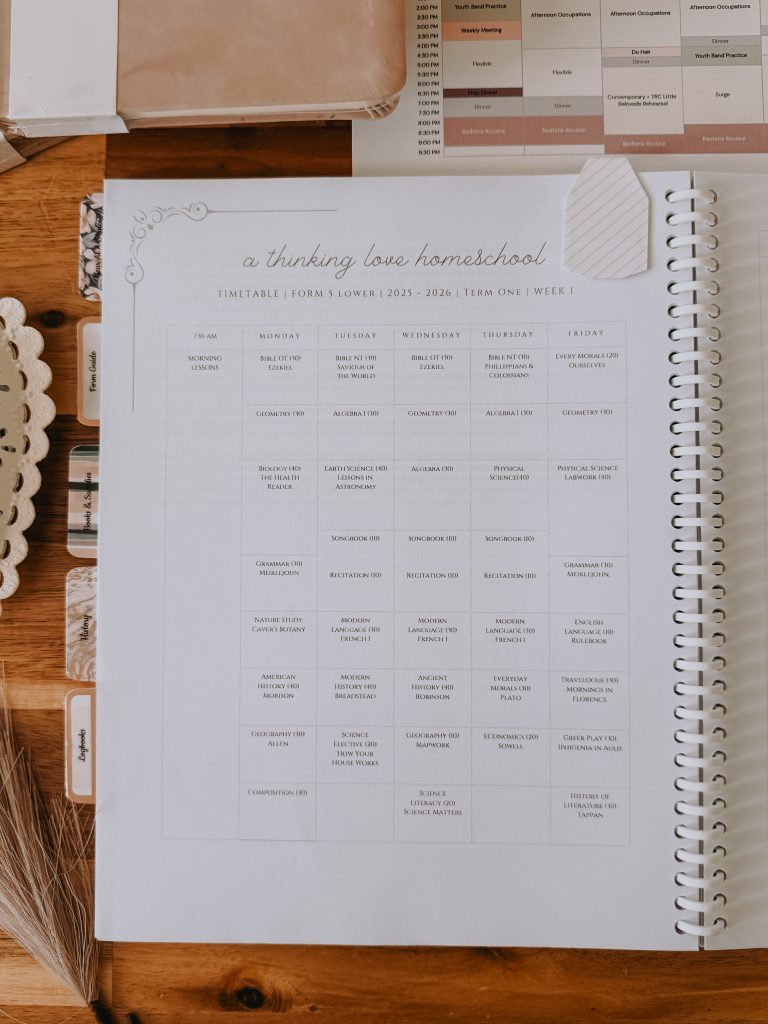
I have come to realize that in order to lay a wide and generous feast of knowledge for my high schooler — short morning lessons and no homework after school — one must practice the habit of attention and set good boundaries for deep work. For us, it means that we are homebound in the morning, with minimal distractions and talking (which is still a work-in-progress for our chatty family of 5). I do my best not to schedule anything outside of home during our morning lessons, and prioritize my availability for my teen during her consultation block. She also does her best to adhere to her assigned blocks using a timer, to bring back her awareness of time (again, a work-in-progress). Her school schedule is well-planned but fluid. There are days when time is limited for morning lessons and she can only accomplish the essentials. There are days when much can be accomplished in certain subjects. All “deviations” from her timetable and planned work are recorded in her logbook, so that we can review and reflect at the end of the week/term.
“Our part is to remove obstructions and to give stimulus and guidance to the child who is trying to get into touch with the universe of things and thoughts which belongs to him.”
— Charlotte Mason, School Education, p. 188
2. To Practice Masterly Inactivity
Instead of constant correction and endless interference from the teacher, which only results in passiveness, stress, and interruptions in the student, I am determined to work towards the learned skill of truly practicing “masterly inactivity,” “wise passiveness,” and “letting alone,” especially in these high school years. As we progress through each week, even though it is difficult for me to let alone and offer the grace of autonomy to my daughter, I can often correlate my calm inactivity with her productivity and excellency, which still sounds incredible and impossible to me…
”’wise passiveness’ … indicates the power to act, the desire to act, and the insight and self-restraint which forbid action.”
— Charlotte Mason, School Education, p. 28
On the other hand, there are many weeks I am grateful that I can offer more space for her to grow in endurance and to learn at her own pace, to allow the Spirit to work in her heart rather than insisting my own ways. Although imperfectly, I am learning to trust with greater faith that God will make all things work together and He has all things under His control.
“It is far easier to force children to be passive recipients of certain predigested scraps of information, it is a much more difficult matter to allow the child to be active in the matter and to get him to do his best. It requires a great faith and trust — the harder the case the greater the faith and trust.”
— Boardman, p. 474-475

3. To Ensure Honest Effort and Excellency
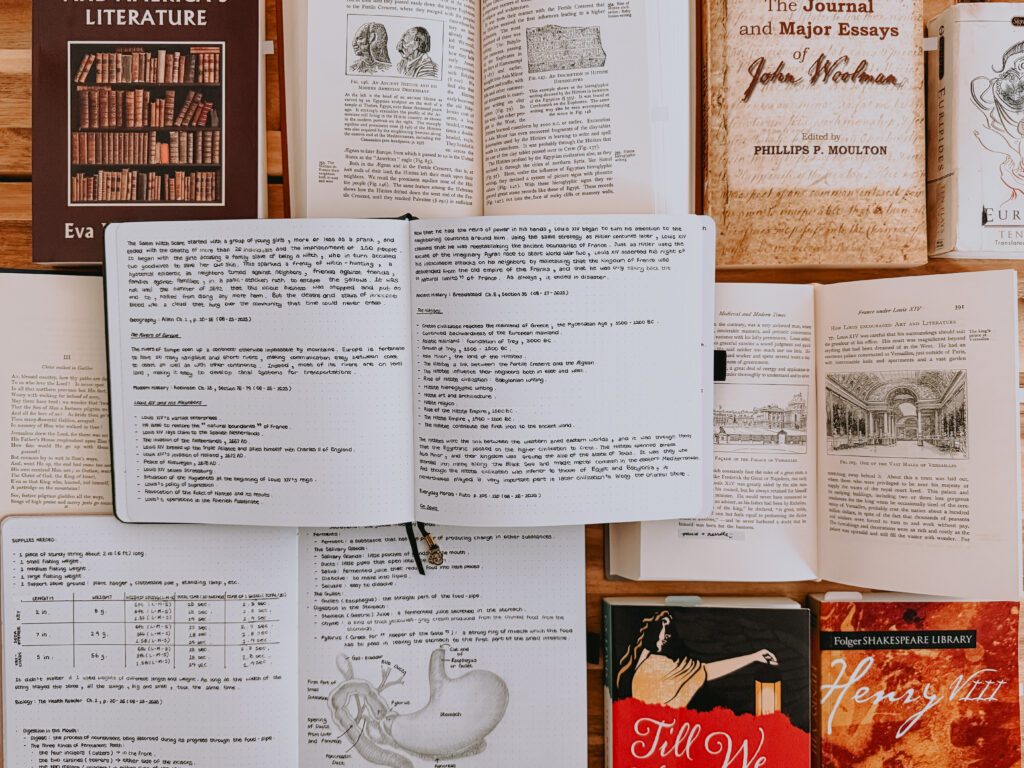
To effectively practice “masterly inactivity,” the teacher still notes down any observations of her students on a daily basis, offers guidance whenever needed, and ensures honest effort by reading every single assignment that has been turned in. Instead of constant overseeing and rebuking, I make it my goal to evaluate her narrations every week (again, imperfectly). There are weeks I am certain more than enough efforts have been put in her writing. There are also weeks (often with unfavorable conditions), not much have been written, then I will use our time during weekly meeting to sparkle further discussions and give her another chance for oral narrations. What I love most to see is assimilation of ideas across subjects (even across the years), or practical applications to her daily observations and recent experiences. I believe her love of learning, even towards subjects that she is not naturally interested in, suddenly becomes relevant and engaging once she has started making relations.
”’…But what do you do? That is the question — what of the teacher? To ensure honest effort, to ensure good narration and therefore assimilation of what is read requires ‘ceaseless though quite unobstructive’ activity on the part of the teacher.”
— Boardman, The P.U.S. Method of Narration and Its Purpose, p.474

4. To Allow Freedom in the Intellectual Feeding
When we first started homeschooling, I would have never imagined about raising a writer and a poet. I am grateful that God has led us to the foundation of methods and philosophy that Charlotte Mason laid down for us, and the resources and wisdom from the CMEC. As we faithfully show up at school each day, I see my high school student open her school books with excitement, looking forward to the encouragement she often receives from reading great people of the past, who endured unimaginable challenges but still did not swerve nor give up their hope for a better world.
As the years pass by, I witness how her education shapes her personhood and fuels her dreams. Having been immersed in the freedom of a liberal education since first grade, my teen has started publishing her writing here on the Student Corner, a creative project that we have been talking about for some time, and finally made it happen, as her writer’s heart flourishes and one step closer to her dream.
”The teacher who allows his scholars the freedom of the city of books is at liberty to be their guide, philosopher and friend; and is no longer the mere instrument of forcible intellectual feeding.”
— Charlotte Mason, Toward a Philosophy of Education, p. 32
5. To Remain Focused on Successful Work
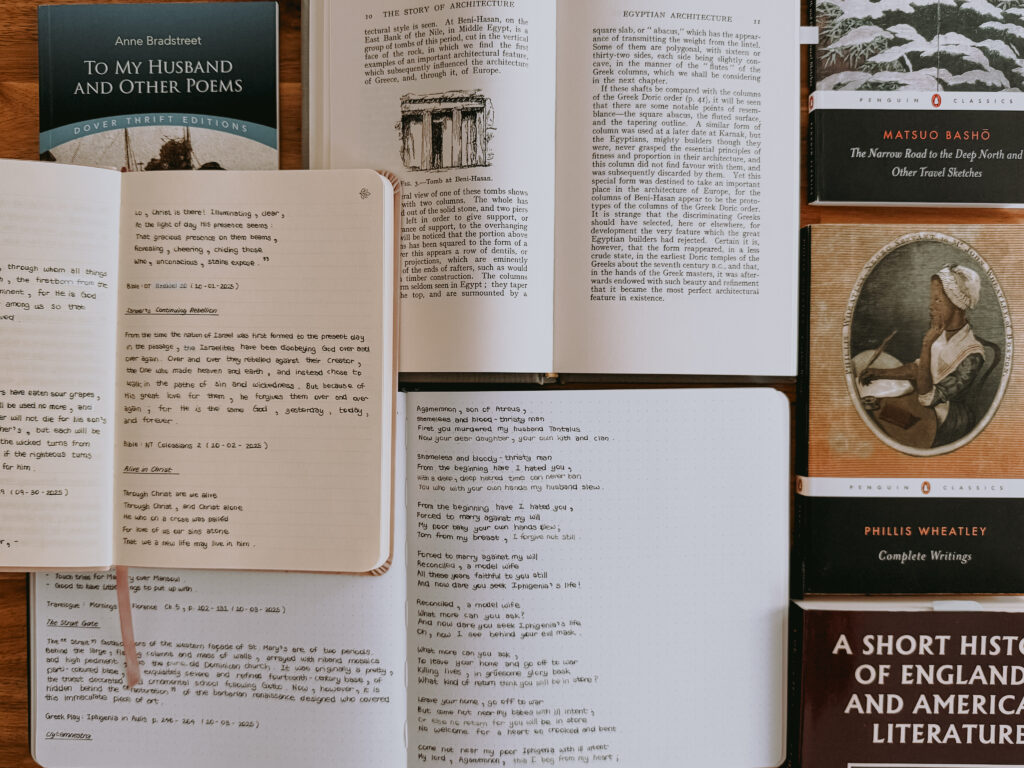
How often are we discouraged by regrets and unrealistic expectations set upon ourselves, dwelling on things outside of our control, nurturing our anxiety-ridden heart and mind, instead of surrendering to His way and His outcomes? It is easier to look at my student’s poetic narrations and lovely handwriting, and comment how beautiful they are. Or look at her logbook and worry about what did not get done last week. But through our weekly conversations, understanding and trust is built, with the perspective of viewing my child as a unique, born person – the hard work, the struggles, and the endurance being developed behind each narration. As we sit together and causally chat about what has been done exceedingly well and celebrate breakthroughs from previous weeks. We also try to identify any recurring issues and find ways to improve them in the weeks following. This bittersweet journey of being her “guide, philosopher, and friend” is what keeps me motivated on challenging days.
“… letting our thoughts well on misfortune leads to nothing, thinking about it is only another name for worrying … It is quite common to hear people say almost proudly, ‘ I am so worried about so and so,’ when ‘ so and so ‘ is something quite outside their power to alter … They should instead be turning their thoughts to something pleasanter, and making the world brighter instead of more dismal for those around them.”
— Helen Webb, Parent’s Reviews, August, 1913, p.262
6. To Perseverve with Confidence, Courage, and Grace
Although I do not always have the capacity and energy to love and educate my children well, fulfilling my calling and duties with delight, while managing my home and all other areas in life, the Creator still calls me “qualified.” For He is the One at work, and I am merely His “principal agent in the development of her child.” (Vol. 1, pg, 3) Thus we enter many weeks imperfectly, not being able to do all the tasks I mentioned above, and yet, I am amazed at what the Lord has done in my children’s education, even without much of my own careful attention and effort. It is in the midst of my inadequacy and limitations, with confidence, courage, and grace, God gets all the glory as we make our way intelligently towards our goal.
“It is only as we recognize our limitations that our work becomes effective: when we see definitely what we are to do, what we can do, and what we cannot do, we set to work with confidence and courage; we have an end in view, and we make our way intelligently towards that end, and a way to an end is method.”
— Charlotte Mason, Parents and Children, p. 33